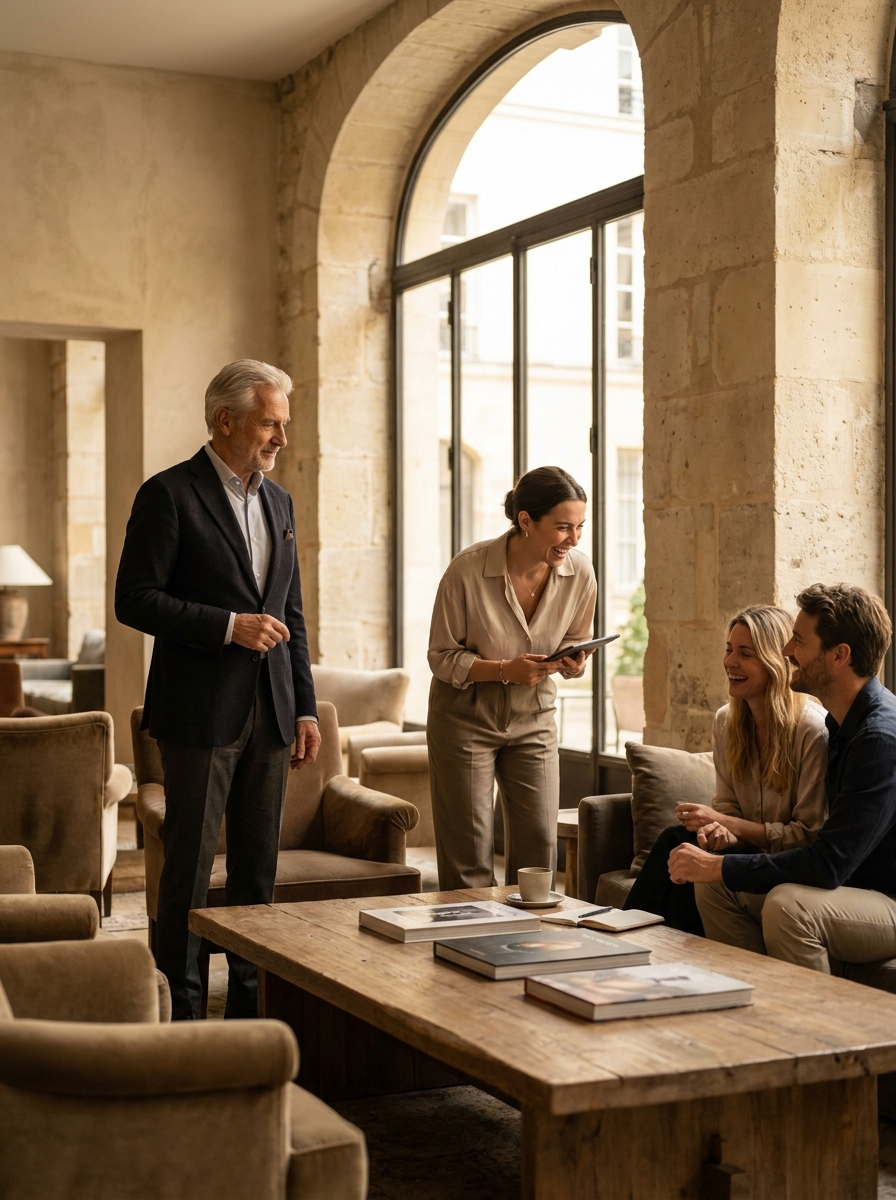
Luxury Hotel Guest Experience
Training That Starts Before
a Guest Says a word.
Recognise the subtle signals of dissatisfaction earlier, respond while trust can still be protected and create an experience guests genuinely feel.
For owners, general managers and guest experience leaders who want the quality of the human experience to match the quality of the property.
Award Winner
Best Behavioural Intelligence Consultancy 2026
What is luxury hotel guest experience training?
Luxury hotel guest experience training helps a team recognise, interpret and respond to the behaviours that shape how a stay is felt. It goes beyond service standards to develop judgement: noticing hesitation, reading withdrawal, carrying context between departments and restoring trust when something has gone wrong.
Beautiful interiors, thoughtful amenities and exacting standards all matter. They are also no longer rare. Most luxury properties now offer similarly refined rooms, carefully sourced linen and impressive dining.
What guests remember is created in quieter moments. Whether someone noticed their hesitation. Whether the context behind a request survived the handover. Whether the recovery felt human or processed.
We do not train everyone the same way
A reservations agent, a night manager, a housekeeper and a restaurant host all shape the guest experience, and none of them make the same decisions. They do not need identical training and they should not receive it.
What they need is a shared way of paying attention, and practice built around the authority they actually hold.
Key messageStandards create consistency. Judgement creates the feeling that this hotel understands me.
The complaint is rarely the beginning of the problem.
- A reservation detail is missed. Reception corrects it quickly. The system records the issue as resolved.
- But the guest’s tone flattens. Their questions get shorter. They stop volunteering information. Nothing more is said, and trust has already moved.
- The visible issue was fixed. The felt experience was not repaired.
And the department that fixed it is not the department that caused it
This is the part most quality systems cannot see. A complaint created in reservations gets resolved at reception. Reception logs it, closes it and moves on. The procedural error that produced it sits untouched in another department, ready to happen again next week.
Complaints are easy to track when they start and finish in the same place. Almost none of the expensive ones do.
What your existing view can and cannot show
SOPs, guest surveys, mystery shopping and complaint reports are valuable. They protect standards, surface recurring issues and keep operational discipline. They capture what was completed, reported or scored.
| What you already have | What it can miss |
|---|---|
| SOP compliance | Whether the behaviour felt attentive and appropriate to the moment. |
| Complaint log | The earlier signals, and the cross departmental cause behind the visible issue. |
| Guest survey | The dissatisfaction a guest chooses not to report. |
| Mystery shopping | The wider behavioural pattern across real pressure, context and team interaction. |
| One off training | Whether people can apply the learning later, without the trainer or manager present. |
A guest who might have accepted a thoughtful intervention becomes a guest who needs formal recovery, writes a careful review, or simply books somewhere else next year and never tells you why.
Turn intuition into something your team can practise.
Some exceptional hosts appear to notice everything instinctively. We work out what they are actually doing, then help more of the team do it deliberately.
- 01
Human Impact Audit
An independent view of the guest journey from the first interaction, which usually means the website, the booking system or a social message rather than the front door. We observe touchpoints, team interactions and the moments where the delivered experience and the felt experience separate.
- 02
Findings and priorities
A clear account of what was observed, which patterns repeat and which behaviours deserve attention first. Including the uncomfortable findings. Especially those.
- 03
Practice Labs
Role relevant, scenario based practice so people can apply stronger responses under realistic conditions, with the authority they actually have.
- 04
Ongoing strengthening
Follow up observation, leadership support and, where useful, the Human Impact Board to keep behavioural priorities visible over time.
Why an outside view
Anyone working inside a hotel has an interest in how the work gets done. That is not a criticism, it is human. We are there for the guest, and we have nothing to protect.
That also means we report what we see even when it is uncomfortable, for you or for us. An audit that only confirms what leadership already believes is not worth commissioning.
Key messageWe work with your teams, not against them. There is no blame culture in this, and there never will be.
The basics are a given. The behaviour is the difference.
Your SOPs should already be current and accurate. We read them anyway, because reading them is how we find the places where a correct procedure produces an awkward moment.
What we go through
- Your standard operating procedures, adjusted where a small change would make the guest experience more human without making it slower.
- Your complaints procedure, followed across departments rather than within them, so the cause and the correction can be traced to different places.
- The full guest journey from first contact, including the website, the booking system, social channels and everything that happens before anyone arrives.
- Your team structure, so we know who holds which decisions and where people are left without cover.
Then the behavioural layer
| Capability | What it strengthens |
|---|---|
| Arrival presence | Whether a guest feels recognised and received rather than processed. |
| Reading the unspoken | Noticing changes in tone, pace, posture and willingness to ask. A sigh means nothing on its own. Read together with everything else, it means a great deal. |
| Emotional timing | Knowing when to engage, when to give space, and when a well meant intervention is arriving too late. |
| Recognition that lands | Using what is known about a guest in a way that feels considerate rather than performed. |
| Recovery and dignity | Repairing how the guest feels, not only correcting the practical failure. |
| Judgement without cover | Making a good decision when the line manager is not on the floor and the script does not fit. |
The last one is where the work pays for itself. Any team performs when the manager is standing there. What matters is what happens at eleven at night, in a corridor, with nobody else around.
A different view of quality in luxury hospitality.
| Approach | Primary focus | What we add |
|---|---|---|
| SOP review | Was the required process followed? | How the behaviour and the timing affected the way it was received. |
| Traditional mystery shopping | Did the experience meet defined criteria? | Where trust or connection shifted, and what pattern sits behind it. |
| Customer service training | Did the employee learn the expected technique? | Whether the person can read context and choose a response without a script. |
| Motivational workshop | Did the session create energy and awareness? | Whether the behaviour can be practised, observed and strengthened afterwards. |
Key messageWe do not replace your standards. We reveal the human layer that decides how those standards are received.
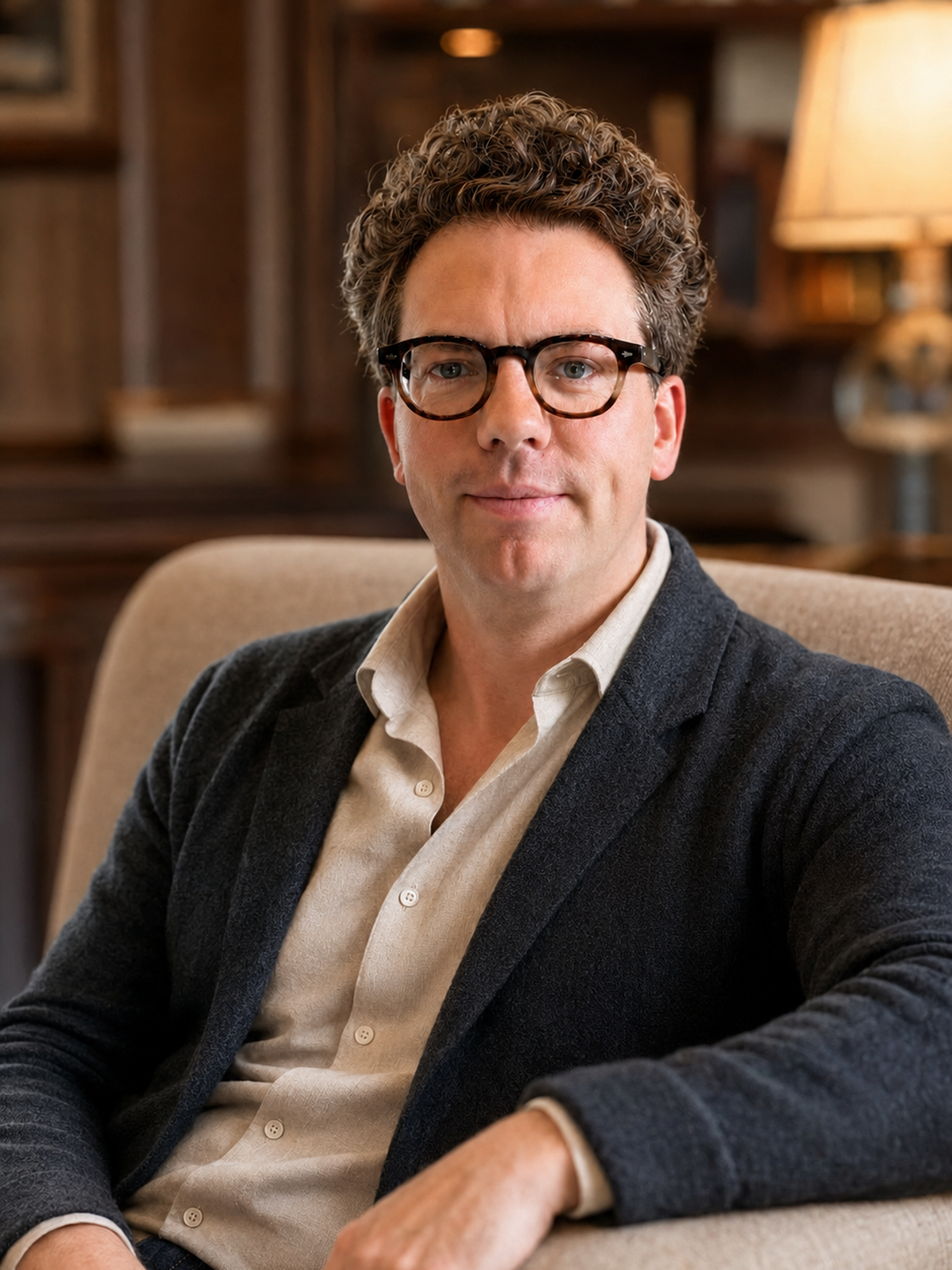
Freddie Lovett’s perspective comes from working inside luxury hospitality, alongside the teams and leaders responsible for delivering the experience in real time.
He knows the handover that loses the context. The complaint created in one department and resolved in another. The manager who cannot be present for every decision. The employee who needs confidence when the script no longer fits.
He also knows what most decision makers see, which is a list of things that need doing, and what they often do not see, which is everything getting in the way of doing them.
The purpose is never to catch people out. It is to make the process robust enough that anyone can hold it up, including the general manager, on a morning when he is the one setting the breakfast tables.
Questions from independent luxury hotel leaders
How is this different from traditional mystery shopping?
Mystery shopping usually assesses whether defined standards were met at chosen moments. We look at how the experience was felt, where trust changed and which behaviours caused it. It can sit alongside your existing quality programme rather than replace it.
Is this an audit or a training programme?
Both, in that order. The audit tells us what your team actually needs to practise. Training designed before anyone has watched your hotel is training designed for a generic hotel.
What exactly do you observe?
The guest journey from first contact, team interactions, handovers between departments, recovery moments and leadership presence on the floor. Scope is agreed with you in advance.
Will you tell us things we do not want to hear?
Yes. That is most of the value. We report what we see even when it is uncomfortable, for your team or for us. We do it without blame and we do it to your leadership first.
Will this replace our SOPs?
No. We read them and may suggest small adjustments where a procedure is producing an awkward moment, but the standards remain yours.
Can it be adapted to different departments and roles?
Yes, and it should be. A reservations agent, a housekeeper and a restaurant host need the same quality of attention and completely different practice, because they hold completely different decisions.
How is improvement measured?
Against a small number of observable behavioural priorities agreed at the start, revisited through follow up observation, leadership review and the Human Impact Board where useful.
What does it cost?
It depends on the size of the property, the number of touchpoints and roles involved, and how much follow up you want. We define the scope first, then give you a specific figure. There is no standard package.
Where should we begin?
With the part of the guest experience you least understand. For most independent hotels that is either the gap between the booking experience and the arrival, or what happens after a complaint has technically been resolved.
Build a hotel that guests hand down.
The property brings them once. What your people do decides whether they come back, and whether they bring their children twenty years from now.
Your team already creates hundreds of human moments every day. We help you see which ones are building that, which ones are quietly working against it, and where a little more awareness would make the most difference.
Start with a confidential conversation about the part of your guest experience you want to understand more clearly.