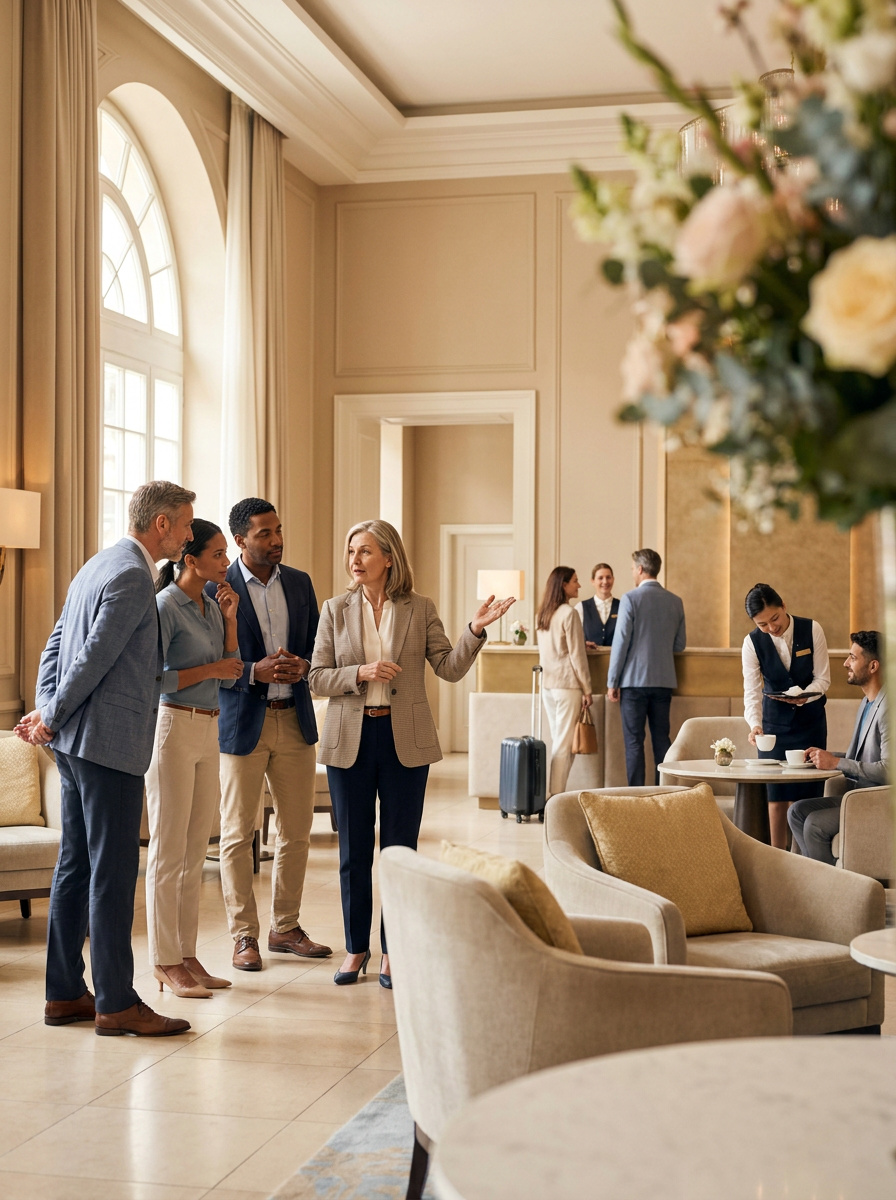
Guest Experience Training for Hotel Groups That Guests Can Feel Across Every Property
A brand standard can define what should happen. It cannot guarantee how the moment will be felt.
Unspoken Signals helps hotel groups reveal behavioural gaps across properties, train teams to recognise subtle guest signals and strengthen a more consistent human experience without removing local character.
For group operations, regional leaders, brand and quality teams, and HR and L&D leaders who need the brand promise to live beyond the manual.
What is guest experience training for hotel groups?
Guest experience training for hotel groups is a portfolio level approach that helps teams recognise, interpret and respond to the behaviours that shape how a stay is felt. It builds one behavioural language across properties while adapting practice to each brand, role, culture and operating context.
Unlike generic service training, Unspoken Signals begins by revealing where the brand promise changes between properties, shifts and teams. Those findings become focused practice, leadership priorities and observable measures of progress.
The consistency gap
For a group, the risk is rarely service quality in isolation. It is variance. The experience is decided by people, and people are the least stable element in the estate.
Group standards align systems, language and expectations. But the experience is delivered through local leadership habits, cultural context, team confidence, timing and judgement under pressure. Add normal turnover and the standard is relearned constantly, by different people, in different rooms.
In one hotel, recognition feels natural. In another, it feels rehearsed. One team carries a guest’s context across departments. Another completes every task correctly but makes the guest start again at every desk.
The challenge is not to add another script. It is to build a shared understanding of what attentive, dignified and context aware service looks like in practice, while allowing each property to remain itself.
Both properties may follow the same standard and score the same. Yet the guest feels a different relationship with the brand.
Operational consistency shows that the standard was followed. Human consistency shows that the brand was understood and felt.
When the gap is invisible, leaders manage outcomes instead of causes.
Guest surveys, quality scores, mystery shopping and complaint reports give group leaders essential information. They show what was reported, completed, scored or escalated.
They do not always show the hesitation before a guest agrees, the withdrawal after a procedural apology or the handover that quietly removes trust. Across a portfolio, the same behavioural pattern may appear as different local problems and never become visible as a group priority.
The silent guest problem
Only 1 in 4 hotel guests said they would report every issue that affects their experience. Reports show what guests chose to say. Teams also need the ability to notice what has not yet been said.
The absence of a complaint is not proof that trust remained intact.
This does not mean the other three guests are dissatisfied. It means complaint data alone cannot reveal every moment in which trust or confidence changes.
Source: Zingle Guest Service Report, 2019.
The brand promise feels dependable in some properties and merely correct in others.
- Regional leaders see local symptoms without seeing the recurring behavioural pattern behind them.
- Group training is completed, yet transfer into daily decisions varies widely.
- Guest recognition and context are lost across departments, shifts or properties.
- A weak moment in one location can shape how the guest judges the whole brand.
Unspoken Signals adds the missing behavioural view. It helps leaders see where trust changes, why the pattern repeats and what teams need to practise before dissatisfaction becomes a complaint, poor review or decision not to return.
Build a common behavioural language without scripting every interaction.
- 01
Reveal the experience.
Human Impact Audits observe selected guest journeys, team interactions and leadership moments in representative properties.
- 02
Understand the pattern.
Findings distinguish group wide themes from property specific conditions, cultural context and isolated events.
- 03
Practise the response.
Practice Labs turn priorities into realistic decisions, language and scenarios adapted to roles, properties and levels of authority.
- 04
Strengthen what works.
Leaders revisit observable priorities through follow up, coaching and the Human Impact Board where appropriate.
What the promise meansVisible means leaders can see the pattern across properties. Trainable means teams can practise responses in their own context. Measurable means progress can be revisited against defined behavioural priorities.
Six areas that reveal how consistently the brand is being felt.
The focus is agreed around the group’s brand promise, guest journey, regional realities and current priorities. Not every property needs the same intervention, even when the wider behavioural theme is shared.
Behavioural consistency across properties
Whether the same standard creates a recognisable quality of attention, warmth and judgement in different locations.
Recognition and personal context
Whether guest knowledge is used naturally and carried across departments, stays and properties.
Continuity across handovers
Where operational transfer succeeds but the emotional reason or guest context is lost.
Cultural and generational context
How teams interpret tone, distance, hierarchy and expectations without relying on stereotypes.
Trust recovery and dignity
Whether recovery repairs the felt impact or only closes the visible task.
Leadership presence under pressure
How local leaders notice behaviour, model the brand promise and support sound judgement on the floor.
What behavioural intelligence looks like across a hotel group.
Visible momentTwo properties, one arrival standard
Both teams follow the process. One guest feels welcomed; at the other property, the timing and language feel transactional.
Define the behavioural intent behind the standard and practise how it can be expressed naturally in each local context.
Visible momentA loyal guest changes properties
Profile information transfers, but the reason behind a preference does not. Recognition feels mechanical rather than personal.
Carry relevant context, not only data, and help the receiving team use it with discretion and judgement.
Visible momentGroup training, uneven application
Completion rates are high, yet managers observe very different behaviour once teams return to the floor.
Translate the learning into observable priorities, local scenarios and coaching language leaders can revisit.
Visible momentA local recovery becomes a brand issue
The practical failure is corrected, but the guest remains withdrawn and later describes the entire brand as indifferent.
Train teams to check whether trust has been restored and help leaders identify the behavioural pattern behind repeat cases.
Clearer visibility for leaders. Greater confidence for teams. A brand guests can recognise in how it feels.
- Regional and property leaders gain a shared language for observing and coaching behaviour.
- Teams recognise relevant signals earlier and respond with more confidence within their authority.
- Group learning becomes easier to adapt to real roles, pressure points and cultural settings.
- Handovers carry the context that protects continuity, not only the task that must be completed.
- Brand and L&D teams can see where a group priority needs central support and where a local response is more appropriate.
- A more consistent quality of guest experience without erasing the individuality of each property.
- Earlier intervention before dissatisfaction requires formal recovery or becomes reputational damage.
- More useful comparison across properties based on observable behaviour, not simplistic uniformity.
- Greater employee pride and capability because people understand the intent behind the standard.
- Behavioural intelligence embedded in leadership, training and the way the group protects its brand promise.
The aim is not identical behaviour everywhere. It is a dependable human standard that remains credible in different settings.
What teams and leaders describe afterwards.
Freddie worked directly with our team to uncover the communication patterns affecting trust and performance. His practical, hands-on approach helped people recognise what was happening beneath the surface and respond differently. The result was stronger teamwork, better outcomes and a healthier working environment.
Freddie combines deep hospitality experience with an exceptional understanding of how people communicate. He notices the human signals that standards and processes often miss and helps teams turn that awareness into a more confident, connected and productive service culture.
In my ten years in hospitality, Freddie was one of the best people I worked with. He was at his strongest when something went wrong. He stayed composed, noticed what others missed and found a way forward that restored trust, not just solved the immediate problem.
Before the session, I assumed some of the tension in our team was simply down to personality. Freddie helped me see how much came from different generational habits, especially in the way we communicated, gave feedback and showed respect. I changed a few small things in how I approached one colleague, and the difference was immediate. I felt the impact personally, not just professionally.
The change did not happen dramatically overnight, which is probably why it felt genuine. Over the following weeks, I noticed people checking their assumptions, listening differently and handling pressure with less friction. The team became more open with each other and more aware of how their behaviour affected the guest. Gradually, it began to shift the culture.
Freddie understands that the guest experience on a ship is shaped through hundreds of small interactions across departments, cultures and shifts. He has a rare ability to make the human layer practical, helping people understand why signals matter and how to notice them without jumping to conclusions. That understanding is particularly valuable in an environment as complex as cruise hospitality.
A group approach should create comparability without ignoring context.
- 01
Define the portfolio question.
Agree what leaders most need to understand, such as inconsistent recovery, weak training transfer or lost guest context.
- 02
Select a representative pilot.
Begin with a small number of properties, touchpoints or regions that can reveal meaningful contrasts.
- 03
Identify shared and local priorities.
Separate patterns that need a group response from conditions that belong to one property or market.
- 04
Practise with relevance.
Deliver focused Labs using situations, roles and authority levels teams actually face.
- 05
Review and scale deliberately.
Extend what is useful, adapt what is local and revisit progress through observable behavioural priorities.
A hotel group can begin with a portfolio Human Impact Audit, a focused Practice Lab or a defined regional challenge. The engagement should fit the question, not force the group into a fixed programme.
A behavioural view of brand consistency.
| Existing approach | Primary question | Unspoken Signals adds |
|---|---|---|
| Brand standard review | Was the required standard followed? | How was the behaviour received, and did it express the intended human quality? |
| Traditional mystery shopping | Did the property meet defined criteria? | Where did trust, connection or confidence shift, and which patterns repeat across touchpoints? |
| Group training programme | Was the content delivered and understood? | Can teams apply the learning under pressure, in their own roles and cultural context? |
| Guest or employee survey | What did people choose to report? | What can be observed before dissatisfaction, uncertainty or withdrawal is formally expressed? |
Key messageUnspoken Signals does not replace group standards or quality systems. It reveals the human layer that determines whether the brand promise is genuinely felt.
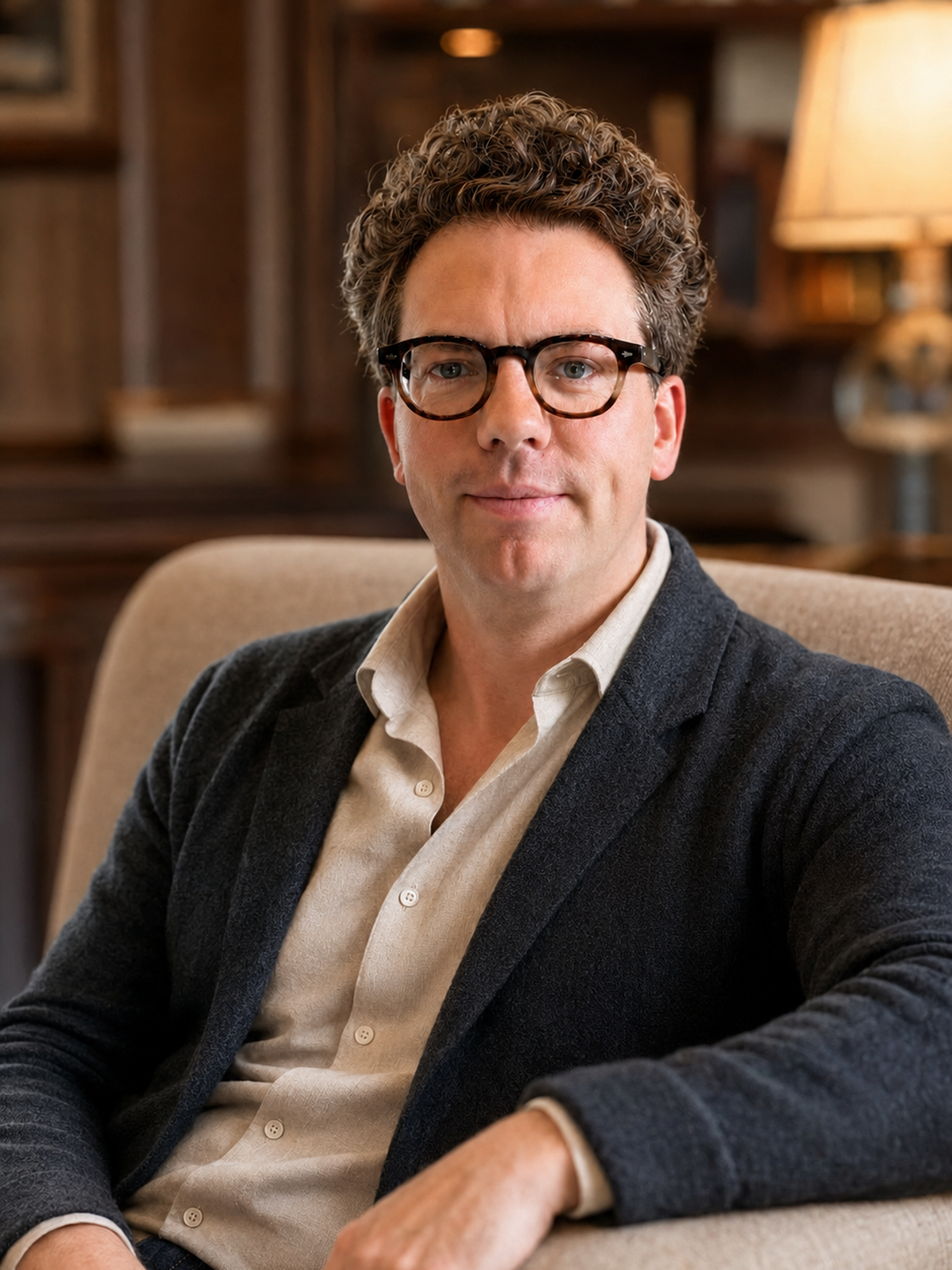
A group strategy only matters if it works on the hotel floor.
Freddie Lovett’s perspective comes from working within luxury hospitality, alongside the leaders and teams responsible for delivering the guest experience in real time.
He understands the distance that can open between a central standard and a live shift: the regional priority interpreted differently by each property, the handover that loses guest context, the manager balancing brand expectations with local pressure and the employee who needs judgement when the script no longer fits.
That operational experience shapes an approach that is honest, collaborative and practical. The purpose is not to rank properties or catch people out. It is to help the group see patterns more clearly and help local teams strengthen the moments they can actually influence.
Questions from luxury hotel group leaders.
What does guest experience training for hotel groups include?
It can include observation through a Human Impact Audit, identification of shared and local behavioural priorities, role specific Practice Labs and follow up against observable behaviours. The scope is defined around the group question rather than imposed as a fixed programme.
How does Unspoken Signals improve consistency without making every property feel the same?
The approach defines the behavioural intent behind the brand promise, then helps teams express it appropriately within their property, role and cultural context. The goal is a recognisable quality of attention, not identical language or personality.
Can the work be adapted across different brands, regions and cultures?
Yes. Group patterns can be identified centrally while observation and practice remain sensitive to local guest expectations, team culture and operating realities. Differences are examined in context rather than treated automatically as failures.
How is this different from mystery shopping?
Mystery shopping usually assesses defined standards and criteria. Unspoken Signals focuses on how the experience is felt, where trust changes and which behaviours or conditions create that shift. It can complement an existing quality programme.
Do we need to begin across the entire portfolio?
No. A representative pilot across selected properties, regions or touchpoints is often the most useful starting point. It can reveal which themes are shared, which are local and where a wider investment would be justified.
How is training adapted to different teams and authority levels?
Practice Labs use realistic scenarios for the roles involved. A front desk agent, department head, regional leader and brand team need different decisions, language and tools even when they are working on the same behavioural priority.
How is improvement measured across properties?
The engagement establishes observable behavioural priorities. Progress can then be revisited through follow up observation, practical feedback, leadership review and the Human Impact Board where appropriate, while retaining the context behind each property.
Make the human experience recognisable across your hotel group.
Your properties do not need to feel identical. But guests should recognise the same quality of attention, judgement and care wherever they meet the brand.
Unspoken Signals helps you see where that promise is already strong, where it changes and what would help teams deliver it more consistently in real situations.
Start with a confidential conversation about the pattern, region or guest journey you want to understand more clearly.